
Table of Contents
Curious why so many Florida warehouses and medical buildings survive Category 5 hurricanes almost untouched? Tilt-up concrete panels Florida hurricane are the reason, and here’s what makes them so tough, plus why cutting one is a specialized job. The durability of tilt-up concrete panels Florida hurricane is crucial in storm-prone areas like Florida.
What Is Tilt-Up Concrete?
In addition, using tilt-up concrete panels Florida hurricane can streamline construction timelines due to their efficient installation process.
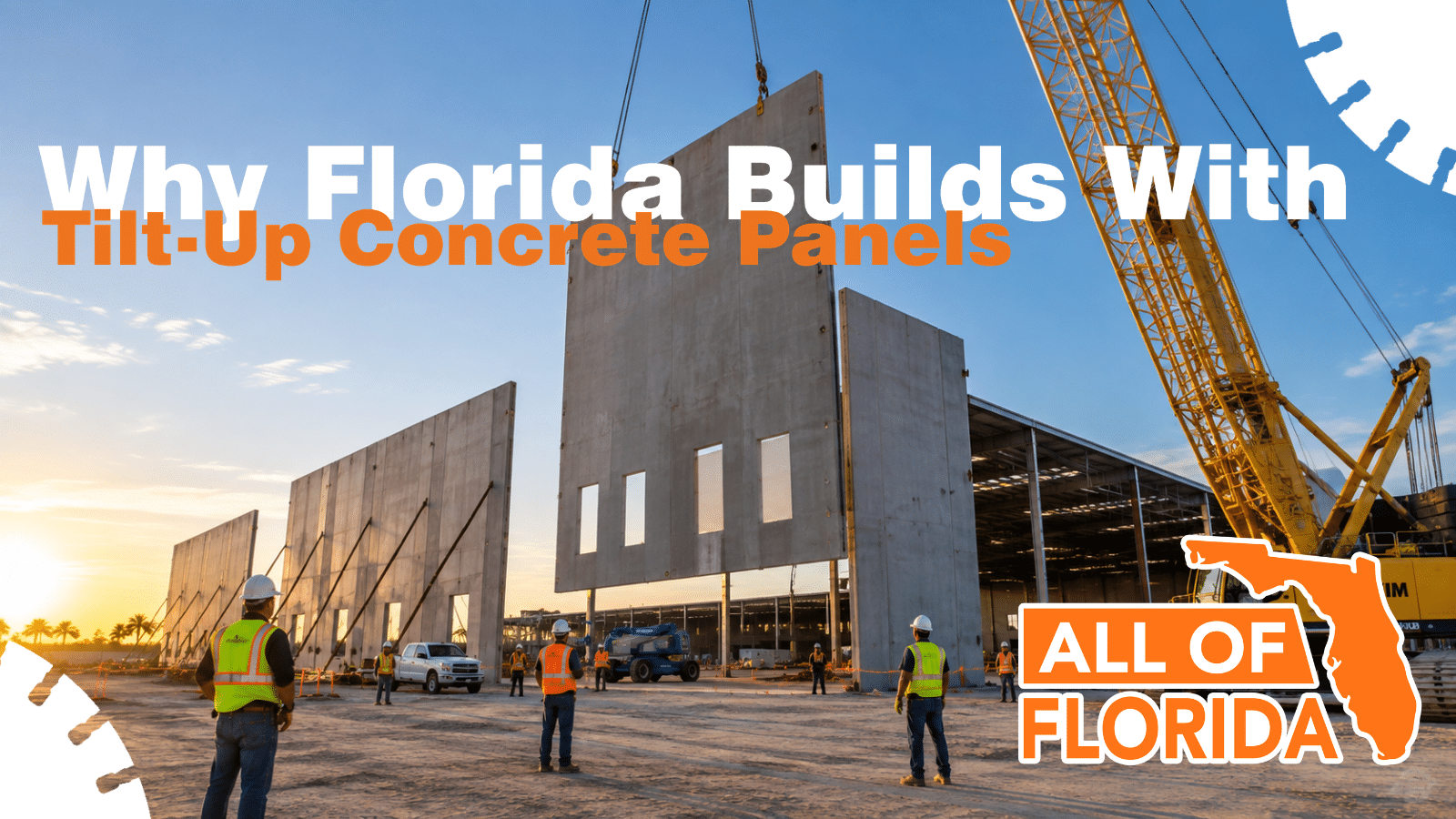
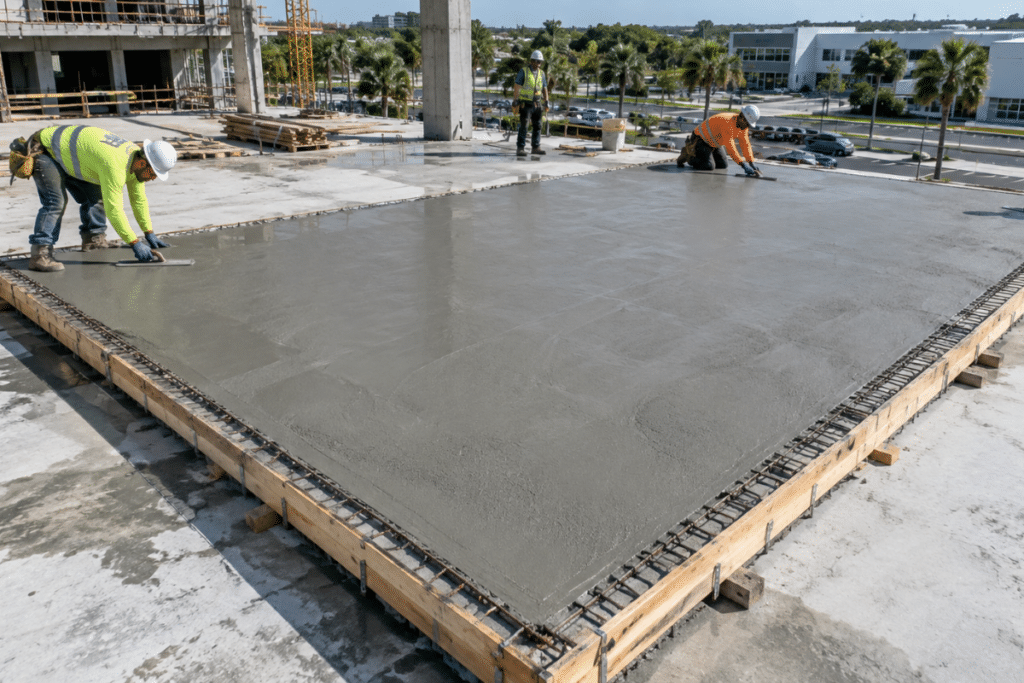
Instead of stacking block or pouring walls vertically, crews pour large concrete panels flat on the ground, right on the building’s own floor slab, let them cure, then use a crane to tilt them up into position. Once standing, the panel ties into the roof and floor system and becomes permanent, a process explained in detail by the Tilt-Up Concrete Association.
Understanding the properties of tilt-up concrete panels Florida hurricane can help builders make informed decisions on modifications.
These panels aren’t small. A typical tilt-up wall panel weighs 60 tons or more, while averaging just 6 to 8 inches thick, roughly the weight of a loaded semi-truck, standing upright as a single piece of concrete.
Benefits of Tilt-Up Concrete Panels Florida Hurricane
Many Florida builders choose tilt-up concrete panels Florida hurricane for their strength and reliability, ensuring long-lasting safety against extreme weather conditions.
Florida started using tilt-up construction back in the 1970s, and the reason was simple: these monolithic panels held up dramatically better in hurricane winds than traditional block or frame walls. A tilt-up wall has no mortar joints or seams, the exact spots where wind pressure and flying debris tend to find weaknesses in block construction. One Florida contractor described it well: a two-by-four launched by hurricane winds can punch through concrete block, but it just splinters against a tilt-up panel, as detailed in this industry report on tilt-up storm performance in Florida.
In summary, tilt-up concrete panels Florida hurricane offer significant advantages in both new constructions and renovations. Moreover, tilt-up concrete panels Florida hurricane are engineered for optimal performance in high-wind zones, making them a smart choice for Florida’s unique climate. As Florida continues to experience intense storms, the demand for tilt-up concrete panels Florida hurricane is likely to rise.
This is why tilt-up concrete panels Florida hurricane are gaining popularity among construction professionals for new builds and retrofits.
The Tilt-Up Concrete Association’s Natural Disaster Task Force went even further, formally investigating tilt-up performance after a major tornado event. Their published findings concluded that tilt-up panels survived the extreme wind loads intact, and that the construction method itself played no role in any building failure investigated. Even in Miami-Dade’s High-Velocity Hurricane Zone, one of the strictest wind codes in the country, tilt-up construction is fully permitted when engineered to meet Florida’s requirements.
One detail most people don’t know: no panel is just “thick concrete.” Every one is designed by a licensed engineer, who calculates reinforcement, connection hardware, and lift points based on that specific building’s height and wind exposure.
Why Cutting One Is a Different Job
Cutting into tilt-up concrete panels Florida hurricane requires specialized tools and techniques to preserve their structural integrity.
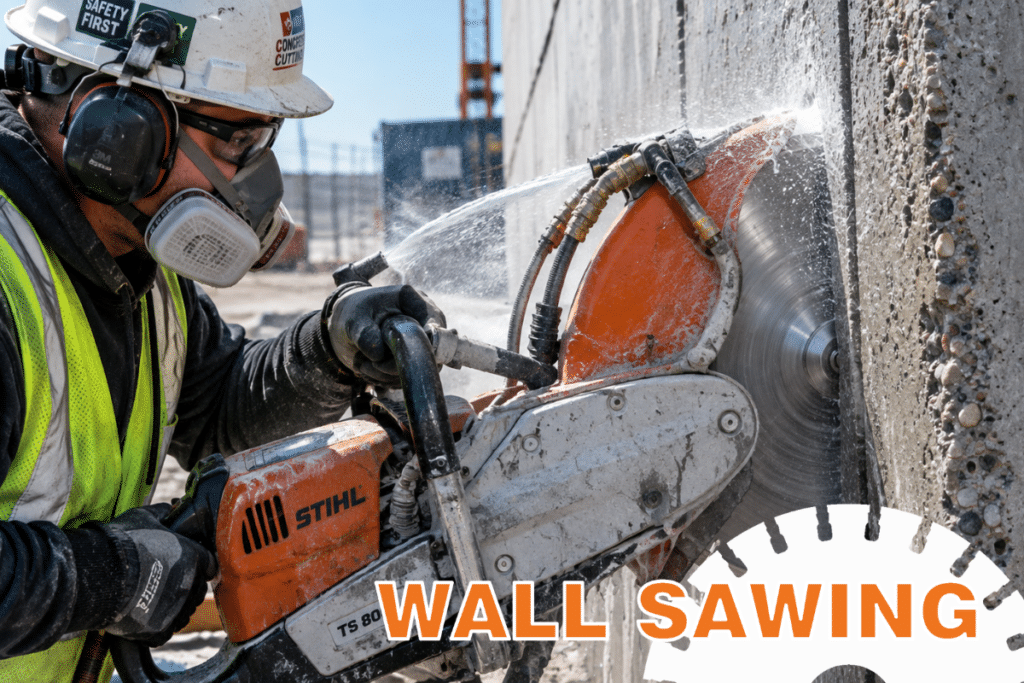
This matters if you’re managing a retrofit, tenant build-out, or new opening in a tilt-up building. At 6 to 9 inches of solid reinforced concrete, this isn’t a job for a standard saw. It takes diamond blades built for that depth, the right speed, and patience to avoid chipping the edges or overheating the blade.
For anyone considering renovations, tilt-up concrete panels Florida hurricane are a reliable option for enhancing structural resilience.
Because these walls are load-bearing, not decorative, a cut in the wrong spot, angle, or depth can compromise the panel’s structural capacity, which is why crews work from engineering drawings instead of guessing dimensions on-site.
There’s also what’s hidden inside the panel: rebar, embedded connection hardware, and sometimes electrical conduit get cast directly into the concrete during the original pour. Cutting blind without scanning first, using ground-penetrating radar or similar imaging, risks hitting rebar, gas lines, or wiring buried inside the slab.
Therefore, using tilt-up concrete panels Florida hurricane can significantly impact safety and efficiency in Florida’s construction landscape.
And because cutting concrete at this scale generates fine respirable crystalline silica dust, a hazard OSHA has specifically regulated since 2016, professional crews rely on wet-cutting methods and dust suppression equipment rather than dry-cutting. This is a real worker-safety issue, not a formality; OSHA’s construction silica standard requires water applied directly at the blade to keep airborne dust below safe exposure limits.
With their monolithic design, tilt-up concrete panels Florida hurricane provide unmatched resilience against nature’s fury.
Frequently Asked Questions
How much does a tilt-up concrete panel weigh?
Most tilt-up wall panels weigh 60 tons or more, with a thickness of only 6 to 8 inches. The exact weight depends on the panel’s height, width, and thickness, all calculated by the project’s engineer.
Is tilt-up really better than block construction in a hurricane?
Yes. It’s poured as a single, continuous slab with no mortar joints or seams, removing many of the weak points that hurricane winds and debris exploit in traditional block walls. It’s permitted even in Miami-Dade’s strict High-Velocity Hurricane Zone.
Can you cut an opening into an existing tilt-up wall?
Yes, but it requires diamond blade saws or core drilling equipment rated for thick, reinforced concrete, along with a scan of the panel to locate embedded rebar and utilities before cutting. Because these panels are structural, changes typically need engineering review first.
Why does cutting concrete generate so much dust, and is it dangerous?
Cutting concrete releases fine respirable crystalline silica dust, a real respiratory hazard with repeated exposure. OSHA regulates this exposure directly, and professional crews control it with wet-cutting methods and dust suppression equipment rather than dry-cutting.
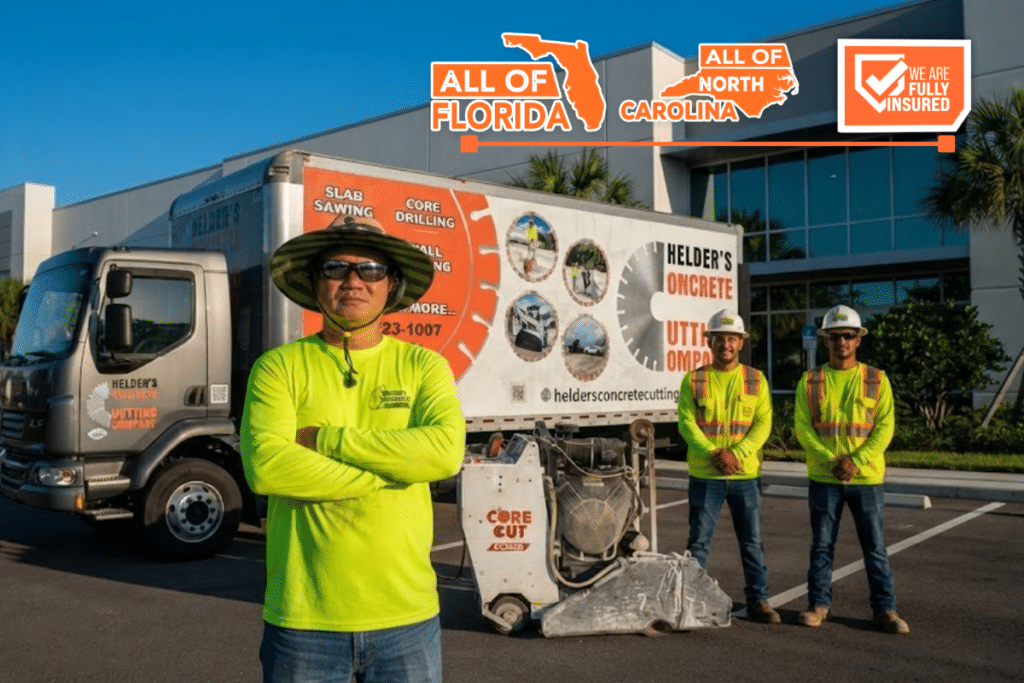
If you’re planning a cut, retrofit, or opening in a tilt-up concrete building anywhere in Florida or North Carolina, Helder’s Concrete Cutting Company has the equipment and scanning process to do it safely and correctly the first time.