
Table of Contents
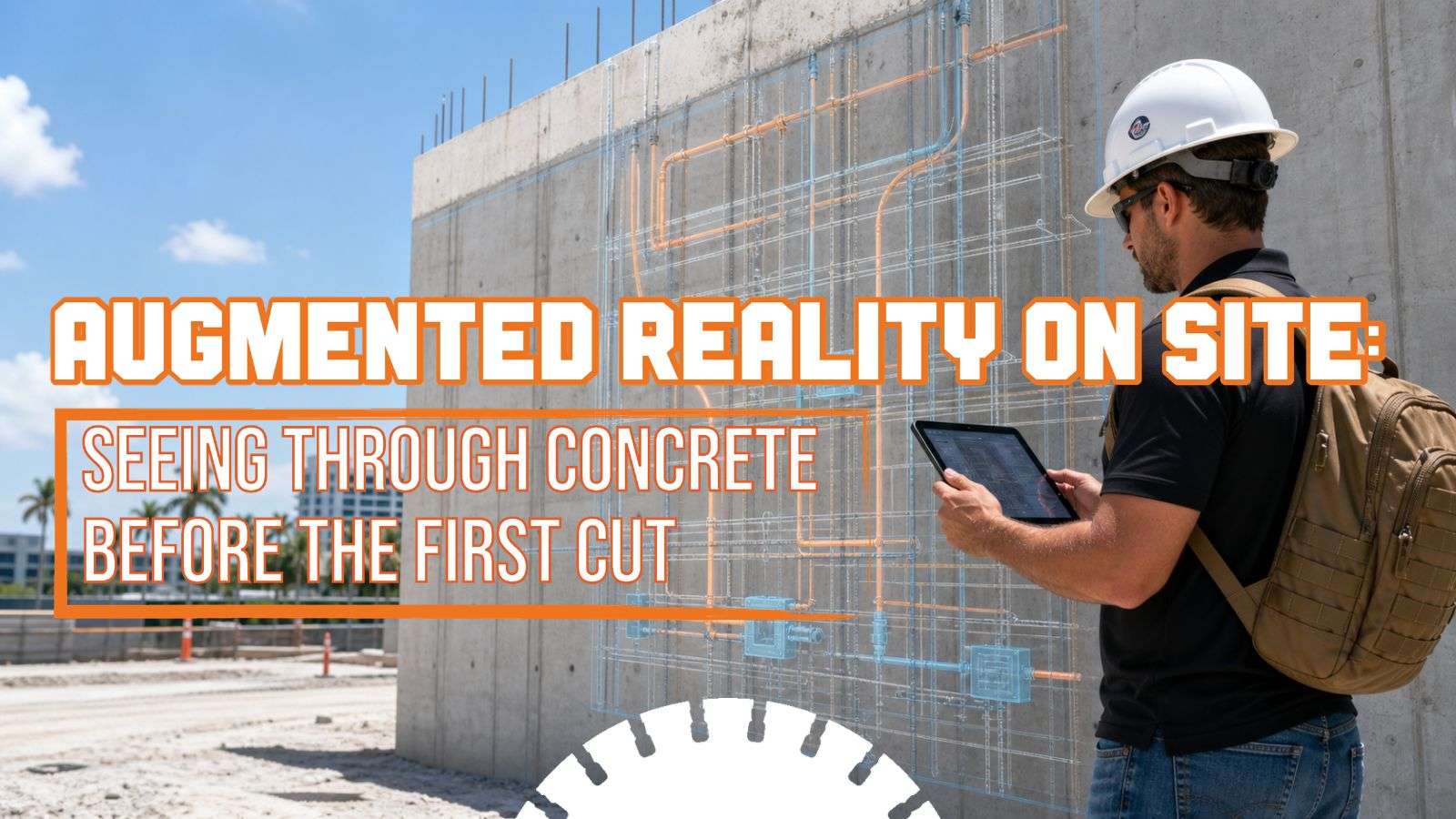
Augmented Reality Concrete Cutting is changing how contractors see and plan what’s inside a slab before the first cut. Contractors who have spent years on site know what it means to open the drawings, find the nearest rebar layout, and trust that the information is accurate. Most of the time, it is. But “most of the time” is not enough when there are post‑tension cables, electrical conduits, or critical pipes inside that slab. That is where GPR changed the industry, and where augmented reality is now taking the same concept to the next level.
We already use GPR. AR is the next step.
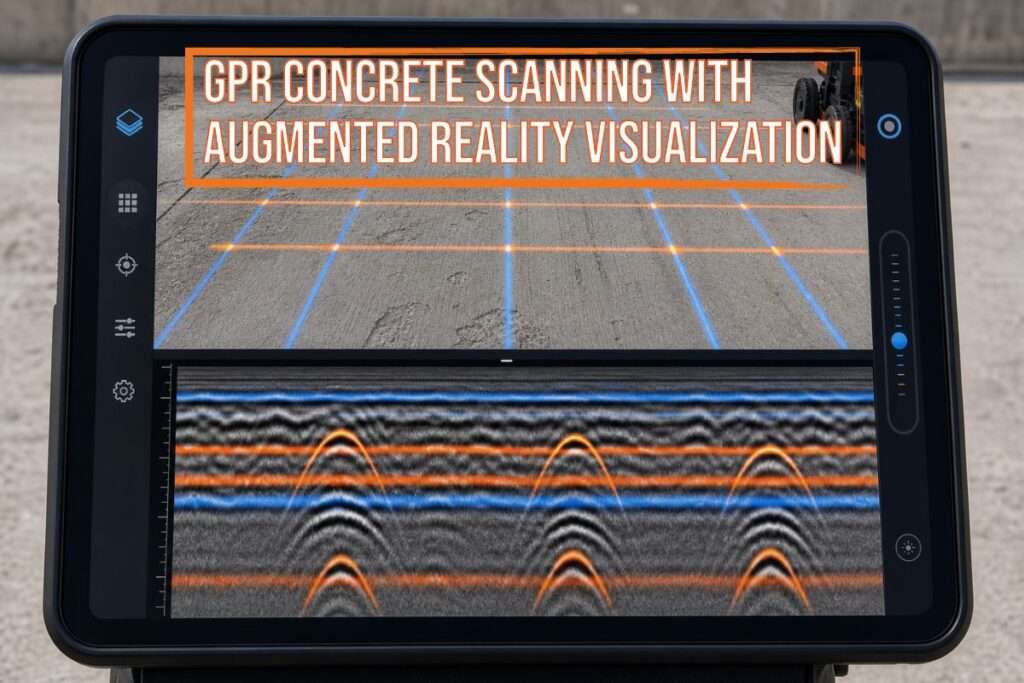
Ground Penetrating Radar (GPR) scanning is not new to us. Before any cut or core, GPR detects what is inside the concrete: rebar, post-tension cables, conduits, pipes and thickness changes. The results show up in real time on the equipment screen, with no need to open the concrete, no radiation and no stopping work around the area. For a general contractor, that alone is invaluable.
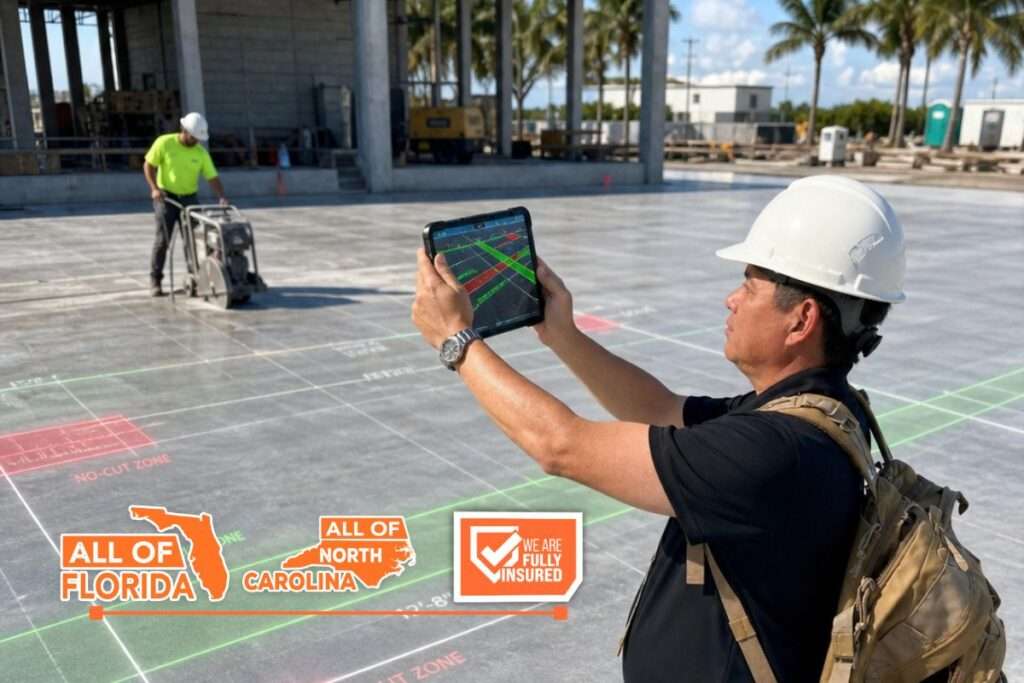
Augmented reality takes those same GPR data and projects them directly onto the real concrete surface using a tablet or headset. Instead of comparing a scan on the screen with the slab in front of you, you see the rebar grid overlaid exactly where it is, at full scale, on the wall or floor you plan to cut. There is no extra translation step and no chance of transferring a dimension incorrectly to the layout. What the sensor detected is what you see, precisely where it is.
Why it matters on site
A two‑inch positioning error on a core drill can be the difference between a clean hole and a damaged post‑tension cable. In commercial structures, churches, hospitals or any building where the original drawings do not always reflect later changes, that margin of error has real consequences: delays, repair costs, liability and, in the worst case, structural risk.
With the AR visualization on the slab, the technician can mark directly on the surface knowing that every cutting point is clear of obstacles. The crew can also share that same digital model with the general contractor, structural engineer or owner before any work is performed. Everyone sees the same thing. Everyone approves based on the same information. That removes a huge amount of friction in projects where coordination between disciplines is critical.
From scan to decision: how the workflow runs
The workflow on site is simpler than it seems. The technician performs the GPR scan over the work area, the data are processed in real time and loaded into the app. The app uses the tablet position and scan data to overlay the internal model of the concrete onto the live camera image. From there, the crew can scroll through depth layers, identify every detected element, label it and export a report directly to the client or project team.
This process does not replace the judgement of an experienced technician, it amplifies it. Reading a GPR scan correctly still requires training and experience, and AR visualization makes that interpretation more precise and easier to communicate. The result is better layout decisions and fewer surprises when the saw or core drill touches the slab. The Value of Processed GPR Data in Concrete Inspection
At HCCC, we apply it where it makes sense
Not every concrete cutting project needs augmented reality. A simple expansion cut in a residential slab or an opening in a wall with no embedded systems does not require that level of detail. But when the project demands it, when there is uncertainty about what is inside, when drawings are old, or when the client needs accurate documentation before and after each intervention, this combination of GPR with AR is the right tool.
At Helder’s Concrete Cutting Company, we use scanning technology on every job where the risk justifies it, and we know firsthand the impact of seeing inside the concrete before the first cut. For the general contractors and owners who work with us, that boils down to one thing: fewer surprises, more control and a job done right from the start.
FAQ
Q1: What is the difference between GPR and augmented reality in concrete cutting?
A: GPR is the technology that detects what is inside the concrete using radar waves. Augmented reality is the way you visualize those data: it overlays the internal model onto the real surface using a tablet or headset, so you can see rebar, cables and conduits exactly where they are before cutting.
Q2: Can I request a GPR scan with AR visualization before a core drilling project?
A: Yes. For projects where there is uncertainty about what is inside a slab or wall, scanning first is the right step before any coring or cutting, especially in commercial structures, churches and complex buildings.
Q3: Is augmented reality on construction sites only for large projects?
A: No. While it is more common on commercial or industrial work, the technology scales well. The key factor is not project size but the risk of cutting into concrete without knowing exactly what is inside.
Q4: Is scanning mandatory before cutting concrete in Florida?
A: There is no statewide law that requires scanning in every case, but industry standards and common sense — say that any coring or cutting in slabs with embedded systems should be preceded by a scan. It is standard safety practice among serious concrete drilling companies.